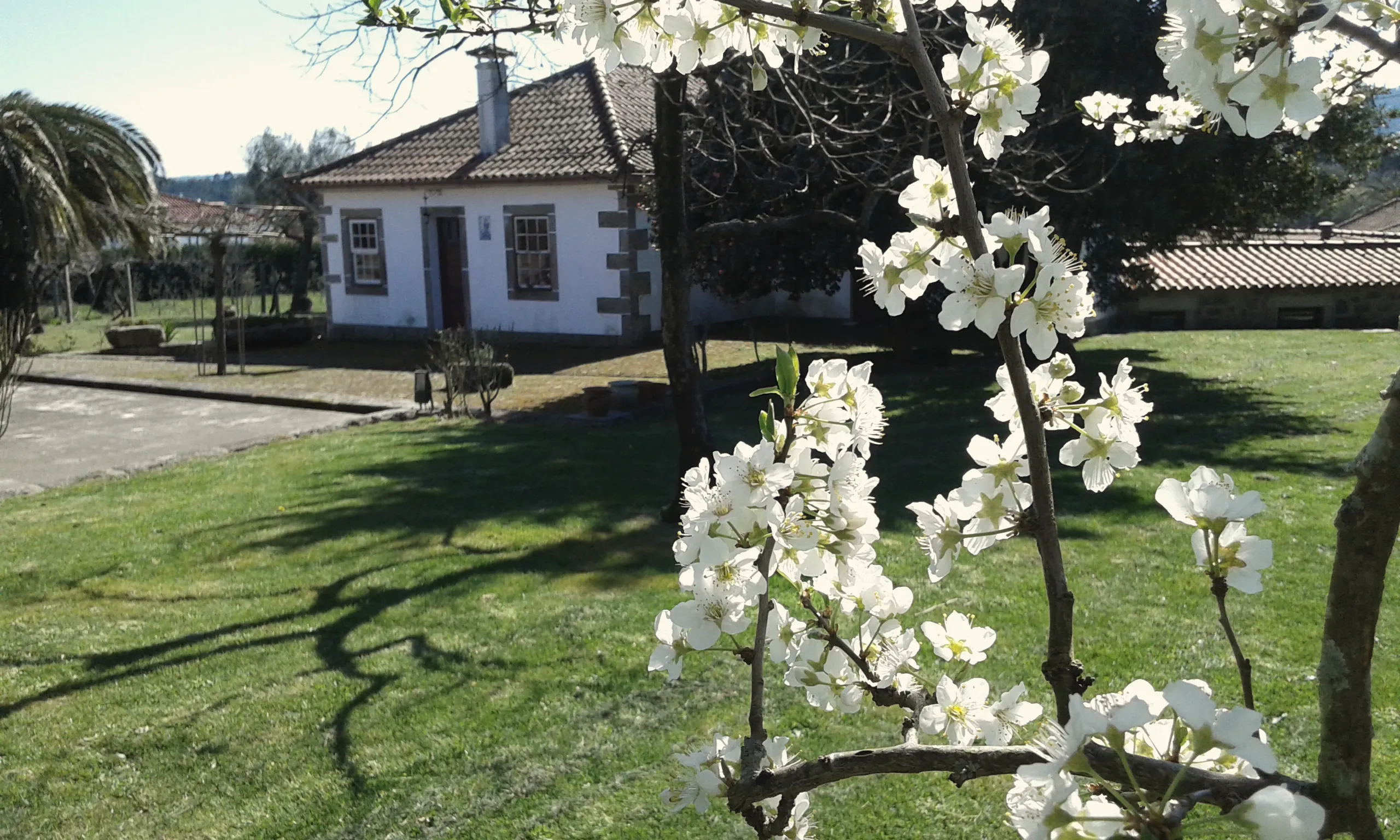
Balugães is a village on the border of the municipalities of Viana do Castelo, Barcelos and Ponte de Lima. It began as an important Iron Age hill fort on Monte de Caramona. The settlement gradually moved down to the fertile plain of the Neiva valley, and the parish grew around its church, built in the 12th century. The name comes from «balugães» or «balugões», a kind of tall laced boot that was widely made here.
Balugães has kept traces of a distant rural past, now coming back to life as the values that shaped our countryside for centuries — part of the founding fabric of Portugal — are recognised again.
Quinta da Cancela was the home of a notary named Ponce de Leão, of Spanish origin, a descendant of the Count of Toulouse and the last representative of his house. He is buried in the chapel of St Benedict, at the entrance of the main arch.
The earliest record of the property dates from the 18th century. The «Água de Quingustos», the water that supplies the estate, also has its rights of use recorded in 18th-century documents.
The estate has belonged to the same family since the 18th century. Working with architects Jorge Cavaleiro (Casa da Eira) and Paulo Costa (Casa do Caminho de Santiago), the current owners made its restoration an exercise in memory, in search of the traces of time: with patience, detail, taste and passion. Every corner, every stone, every tree has a story to tell.
The work favours traditional building techniques and respects the customs and traditions of the Cancela house, resulting in a discreet, welcoming place at one with its surroundings.